
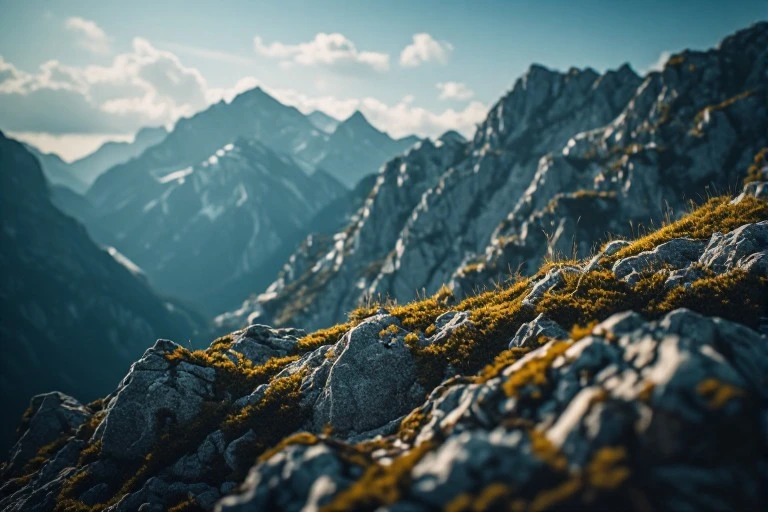
Mountain Instagram captions are short, vivid phrases that turn photos of peaks, trails, and misty ridges into scroll-stopping posts. They blend adventure spirit, nature awe, and personal reflection to spark likes, comments, and shares while lifting your content higher in feeds and search results.
These lines help outdoor lovers, hikers, and travelers turn every climb into a connection point. Ready to level up your feed? Let’s explore original ways to write and use them.
Unlocking Summit Spark With Fresh Phrase Energy ⛰️
- Start every caption by naming the exact feeling the mountain gave you—quiet triumph, burning legs, or pure silence—so readers feel it too.
- Pair a short emotional hook with one sensory detail like cold wind or pine scent to make the line stick in memory.
- Keep the first five words punchy so the caption works even when Instagram truncates the rest.
- Use verbs that move: climb, rise, breathe, conquer—avoid flat words that sit still.
- End with an open question that invites hikers to share their own peak story.
- Weave in the time of day because sunrise light hits differently than golden-hour glow.
- Mention the trail name only if it adds mystery or pride, never as filler.
- Match caption length to the photo’s drama—wide landscapes need fewer words, close-up boots need more.
- Test the line out loud; if it sounds like something you’d actually say on the summit, keep it.
- Add a single emoji that mirrors the mood instead of stacking random ones.
- Rotate between first-person and second-person so some captions speak to the viewer as a fellow climber.
- Save the strongest lines in a notes folder labeled by season so winter peaks never borrow summer energy.
Weaving Trail Rhythm Into Scroll-Stopping Lines 🥾
- Echo the steady pace of hiking by writing captions with a natural rise and fall, short clause then longer one.
- Borrow the sound of boots on rock—crunch, slip, steady—without overdoing onomatopoeia.
- Turn elevation gain into a metaphor for personal progress so the caption works beyond the photo.
- Mention the weight of the pack only when it highlights freedom after you set it down.
- Use weather shifts as emotional pivots: fog becomes doubt, then clearing becomes clarity.
- Keep one concrete number—miles, feet, hours—because specific details feel more real.
- Avoid clichés about “finding yourself” unless you twist them into something sharper.
- Write the caption as if the mountain is listening; it creates quiet intimacy.
- Switch between solo-reflection tone and group-celebration tone depending on who appears in the frame.
- End some lines with the trail continuing beyond the photo so the story feels unfinished in a good way.
- Layer soft alliteration—“silent summits,” “ridge runners”—to make the caption pleasing to the ear.
- Read the finished line while looking at the photo; if the words and image pull in the same direction, post it.
Breathing Alpine Air Into Everyday Feed Moments 🌬️
- Capture the first lungful of thin air after a steep section and turn it into three words that feel expansive.
- Contrast city noise with mountain quiet so urban followers feel the escape immediately.
- Describe the way light moves across rock faces at different hours to give the caption a living quality.
- Use the idea of “above the tree line” as a metaphor for rising above daily stress.
- Mention the taste of trail mix or cold water only when it grounds the grand view in something human.
- Write captions that work for both still photos and short reels by focusing on the feeling, not the format.
- Invite followers to close their eyes and imagine the wind while they read—this boosts dwell time.
- Keep a running list of weather words that feel specific: “knife-edge wind,” “milk-soft fog.”
- Avoid overusing “breathtaking”; instead show what the breath actually does in the moment.
- Pair a calm caption with an energetic photo or vice versa for surprising contrast that stops the scroll.
- Reference the body’s small victories—steady heart rate, strong knees—so the caption feels earned.
- Close with a soft invitation to “take the next step with me” so the post becomes a shared journey.
Crafting Horizon Lines That Pull Viewers Higher 🌄
- Treat the visible horizon as a promise and write captions that lean toward what’s still out of frame.
- Use distance as emotion: far peaks can equal long-held dreams, close ones equal present joy.
- Write one line that names the color of the sky without saying “blue” or “orange”—force originality.
- Turn the act of looking out into an act of looking inward without sounding forced.
- Keep the caption under three short sentences so the eye can jump from text back to the view.
- Mention a single bird or cloud shape only if it adds movement the photo already hints at.
- Create tension between the solid ground underfoot and the open sky above.
- Use the caption to answer the silent question every mountain photo asks: “How does it feel up there?”
- Avoid listing gear unless the photo itself focuses on boots or poles.
- Write seasonal versions of the same idea so autumn ridges never sound like spring meadows.
- Let the last word of the caption land on an image of height or openness.
- Test whether the line still works if the photo is cropped tighter; strong captions survive editing.
Fueling Wanderlust Fires With Ridge-Runner Words 🔥
- Start with the spark that made you leave the trailhead—curiosity, restlessness, pure call.
- Build heat by stacking three sensory details that make sedentary readers want to move.
- Use fire language carefully: embers of dawn, blaze of late light, cool ash of evening.
- Write captions that celebrate the slow burn of a multi-day trek as much as the quick summit push.
- Invite followers to name their next peak in the comments; this turns passive liking into active planning.
- Keep the energy high but the tone humble so the caption never feels boastful.
- Contrast the controlled burn of a campfire with the wild fire of mountain weather.
- End some lines with an unfinished climb so the story continues beyond the post.
- Match caption intensity to the photo’s drama—gentle trails get softer words.
- Use the idea of “carrying the fire home” to link the mountain experience to everyday life.
- Rotate between solo sparks and group blaze depending on who shares the frame.
- Save high-energy lines for reels where motion already supplies the heat.
Mapping Emotional Climbs Through Nature-Tied Narratives 🗺️
- Chart the internal route from trailhead nerves to summit calm in three clear stages.
- Use switchbacks as a metaphor for setbacks that still move you upward.
- Name the exact emotion that hit hardest—fear of heights, joy of arrival—so others recognize themselves.
- Keep the narrative short enough that it fits under a photo without feeling like a diary dump.
- Link the physical map to an emotional one without forcing the parallel.
- Mention one unexpected discovery—wildflowers, animal track, sudden view—to keep the story alive.
- Write the caption as a postcard from the mountain to your past self.
- Avoid over-explaining; leave space for the photo to complete the map.
- Use directional words—up, across, beyond—to give the text quiet motion.
- End with a soft invitation for others to share their own route markers.
- Create a series of captions that follow one multi-day trip so followers can journey with you.
- Check that every emotional claim is backed by something visible in the image.
Amplifying Echoes of Peaks in Shareable Snippets 📢
- Write lines that sound good when read aloud so they travel well in stories and voice search.
- Keep rhythm tight—three beats, pause, three beats—so the caption feels chantable.
- Use repetition of a single strong word to create an echo effect without sounding robotic.
- Design the caption so the most powerful phrase can stand alone as a sticker or quote graphic.
- Test whether the line still lands if someone only sees the first half on a small screen.
- Include one soft call to tag a hiking partner so the post spreads through real relationships.
- Match the volume of the caption to the scale of the peak—quiet for gentle hills, bold for giants.
- Avoid hashtag overload; let the words carry the weight and use tags only for discovery.
- Write versions that work equally well for stills and short video clips.
- Create a bank of echo-ready lines sorted by mood so you never post flat text.
- Let the caption answer the silent “wow” the photo already produces.
- Close with a line that feels like it could bounce off rock walls and come back changed.
Designing Elevation Hooks for Reel and Story Flow 🎬
- Open with a hook that matches the first second of motion—boots stepping, pack swinging, sky opening.
- Keep text short enough to read in the time the clip lasts.
- Use the caption to name the feeling the motion creates rather than describing the action again.
- Write lines that work both as on-screen text and as the post description.
- Create tension between the effort shown and the calm the words express.
- End the text just before the final summit shot so viewers lean in for the payoff.
- Match caption pace to editing speed—quick cuts get punchy words, long takes get slower lines.
- Include one sensory detail that sound cannot provide: the smell of rain, the taste of thin air.
- Design hooks that still make sense if someone watches with sound off.
- Save the strongest elevation phrase for the moment the camera tilts upward.
- Test the line against three different clips to ensure it travels well.
- Keep a separate list of micro-hooks under eight words for rapid story posts.
Sparking Connection Across Valley-to-Peak Expressions 🤝
- Write as if the reader is already on the trail beside you.
- Use “we” language carefully so solo posts still feel inclusive.
- Invite specific memories—“remember the wind at that saddle?”—to pull close friends closer.
- Leave space for comments by ending with a genuine question rather than a statement.
- Celebrate the people who waited at the bottom as much as those who climbed.
- Share one vulnerable detail—shaking legs, unexpected tears—so connection feels real.
- Tag locations only when they help others plan their own trip.
- Create captions that work for both experienced climbers and first-time hikers.
- Use the valley as a metaphor for everyday life and the peak as the rare clear view.
- Write lines that encourage tagging the person who first took them outside.
- Keep the tone warm even when describing hard efforts.
- End some posts with a soft promise to meet on the next ridge.
Mastering Visibility Through Height-Themed Text Strategies 📈
- Place the strongest mountain phrase in the first line so it appears in search previews.
- Use natural language that matches how people actually search for outdoor inspiration.
- Include one specific trail or range name only when it adds genuine local color.
- Write captions that answer common silent questions: “Is it worth it?” “How hard was it?”
- Keep sentences scannable so mobile readers absorb the message in seconds.
- Rotate caption styles so the algorithm sees variety rather than repetition.
- Pair high-effort photos with captions that highlight the reward, not just the struggle.
- Use seasonal language that matches current weather in target regions.
- Create series of related captions so one strong post lifts the others.
- Test which lines earn saves versus likes and lean into the higher-value action.
- Avoid keyword stuffing; let the natural mountain vocabulary do the work.
- Review older posts quarterly and refresh the text if engagement has dropped.
Turning Foggy Mornings Into Clear Caption Gold 🌫️
- Start with the uncertainty of low visibility and end with the clarity that follows.
- Use fog as a metaphor for mental fog that lifts with movement.
- Describe the soft edges of the world without relying on the word “misty.”
- Write lines that celebrate the quiet that arrives when the view disappears.
- Keep the tone patient—fog teaches slower looking.
- Mention the moment the first peak edge appears as a small personal victory.
- Create captions that work for both dense fog and high thin cloud.
- Use the limited view to focus attention on closer details—boots, breath, trail markers.
- End with an invitation to stay present even when the big picture is hidden.
- Pair foggy photos with warmer color words to create contrast.
- Save these lines for days when the weather forces a change of plans.
- Let the caption itself feel slightly soft-edged, matching the visual.
Building Lasting Engagement With Summit-Story Anchors 🏔️
- Anchor every caption to one true moment rather than a generic mountain idea.
- Use the summit as both literal place and emotional high point.
- Write lines that people will want to screenshot and keep.
- Create a sense of before-and-after without showing both photos.
- Keep the language accessible so new hikers feel included.
- Celebrate the descent as much as the ascent—coming down is part of the story.
- Use the caption to plant a seed for the next adventure.
- Invite followers to share their own summit anchors in the comments.
- Match the weight of the words to the weight of the achievement.
- Review engagement patterns and double down on the styles that keep people talking.
- Write captions that still feel true years later when you revisit the post.
- Close the circle by thanking the mountain, the trail, or the people who made the day possible.
Mountain Instagram captions work best when they feel lived-in rather than manufactured. The strongest ones carry the real weight of thin air, tired legs, and sudden beauty. Use the twelve approaches above as a living toolkit: mix emotional climbs with practical visibility tips, foggy softness with ridge-runner fire, and always leave room for your own voice.
Post with intention. Ask real questions. Celebrate both the peaks and the quiet valleys between them. Then watch the comments fill with fellow hikers ready to lace up and meet you higher. Your next caption is already waiting on the trail—go write it.

robineoo is a passionate content writer dedicated to creating original, engaging, and informative articles. With a strong focus on quality, creativity, and readability robineoo covers a wide range of topics while delivering valuable, well-researched content that helps readers stay informed and inspired.